


 +86 18130251359
 teflowpumps@tlpumps.com

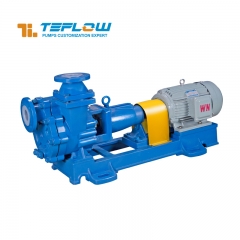
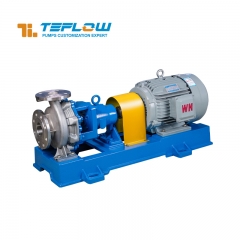
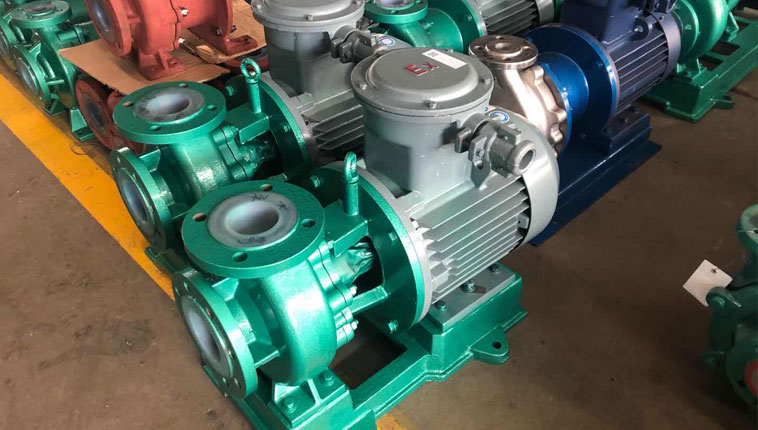
Ammonium chloride aqueous solution is a frequently‑used transfer medium in chemical, pharmaceutical, fertilizer production, food processing, environmental water treatment and other industries. As a typical strong‑acid weak‑base salt, ammonium chloride aqueous solution undergoes hydrolysis upon contact with water and shows weak acidity. Large quantities of free chloride ions in the medium give it strong permeability and corrosiveness. Such special medium properties easily trigger rusting of ordinary metal pump casings, aging and failure of sealing parts, equipment leakage and damage. These problems not only impair stable operation of production lines, but may also cause material spillage, excessive environmental discharge and potential safety risks. Therefore, accurate pump selection based on the properties of ammonium chloride aqueous solution is essential to achieve efficient, safe and low‑cost operation.
Given the weak acidity and high chloride‑ion‑induced corrosion of ammonium chloride aqueous solution, as well as differentiated working‑condition requirements across industries, ordinary stainless‑steel pumps and cast‑iron pumps cannot meet long‑term transfer requirements and are prone to corrosion perforation and frequent repairs. Verified by field tests and engineering practices in multiple industries, fluoroplastic magnetic drive pumps and fluoroplastic centrifugal pumps are two core pump types for ammonium chloride aqueous solution transfer. They serve zero‑leakage high‑risk conditions and high‑flow continuous transfer conditions respectively, covering most production‑scenario demands.
I. Core Medium Properties: Underlying Principles for Pump Selection for Ammonium Chloride Aqueous Solution
To make proper pump selection, it is necessary to understand how ammonium chloride aqueous solution damages transfer equipment. First, the hydrolyzed weak acidity will cause electrochemical corrosion on conventional metals such as carbon steel and ordinary stainless steel after long‑term contact. Second, chloride ions feature strong penetrability, destroying the passivation film on metal surfaces and resulting in pitting corrosion and crevice corrosion on key components including pump casings, impellers and shaft seals, and eventually equipment failure. Third, some industrial scenarios are characterized by fluctuating concentrations of ammonium chloride solution, trace impurities and non‑stop continuous transfer, placing higher requirements on the corrosion resistance, stability and sealing performance of pumps.
Fluoroplastics (F46, PVDF, PFA, etc.) resist corrosion from almost all inorganic acids and salts and deliver excellent resistance to chloride‑ion corrosion. Meanwhile, they offer advantages of anti‑aging, permeation resistance, high‑temperature resistance and anti‑fouling performance, fundamentally solving corrosion challenges caused by ammonium chloride aqueous solution. This accounts for why these two fluoroplastic pump types are preferred options.
II. First Choice for Zero‑Leakage Transfer: Fluoroplastic Magnetic Drive Pumps
For scenarios with strict requirements for sealing performance, material purity and safe production, such as pharmaceutical purification, fine chemical processing, high‑purity fertilizer production and closed environmental water treatment, fluoroplastic magnetic drive pumps are the optimal solution for ammonium chloride aqueous solution transfer and are widely‑recognized dedicated pumps for zero‑leakage applications.
The core advantage of this pump lies in its mechanical‑seal‑free, zero‑leakage design, which completely eliminates risks of shaft‑seal seepage and dripping. All wetted parts are made of corrosion‑resistant materials such as F46 and PVDF. They can withstand long‑term exposure to ammonium chloride aqueous solution of various concentrations without metal corrosion, medium contamination or particle shedding, perfectly meeting transfer requirements for high‑purity materials.
Apart from superior sealing and anti‑corrosion performance, fluoroplastic magnetic drive pumps run stably with low noise and low failure rates, effectively addressing pain points of traditional pumps such as frequent seal replacement, material loss from leakage and on‑site environmental pollution. With no shaft‑seal friction loss, the equipment consumes less energy and greatly cuts later‑stage maintenance costs. It suits regular ammonium‑chloride‑solution conditions ranging from ‑20 ℃ to 100 ℃ and fully satisfies compliance requirements for high‑end production scenarios including fine chemical, pharmaceutical and food industries.
Summary of applicable conditions: Medium‑and‑small flow rates, high sealing requirements, high‑purity material transfer, flammable‑explosive and environmentally‑critical scenarios, e.g. pharmaceutical mother‑liquid transfer, high‑purity ammonium‑chloride reagent delivery, closed sewage treatment and fine‑fertilizer production lines.
III. Main Equipment for High‑Flow Transfer: Fluoroplastic Centrifugal Pumps
For regular high‑flow, continuous and large‑volume transfer conditions such as mass fertilizer production, large‑scale chemical production lines and centralized industrial wastewater treatment, fluoroplastic centrifugal pumps stand as major transfer equipment thanks to stable high‑flow capacity, high pressure resistance and favorable cost‑performance.
Fluoroplastic centrifugal pumps combine structural stability with full‑range corrosion resistance and effectively resist erosion‑corrosion and chemical corrosion induced by ammonium chloride under high‑flow conditions. Compared with fluoroplastic magnetic drive pumps, this pump type covers a wider flow scope and delivers higher head, perfectly satisfying non‑stop heavy‑duty transfer demands of large‑scale production lines with outstanding continuous‑operation stability.
Its sealing components are wear‑resistant, high‑temperature‑resistant and anti‑aging, maintaining reliable sealing performance under high‑flow medium scouring and preventing medium leakage. In addition, the equipment features simple structure for easy disassembly and assembly with low maintenance barriers. It adapts to high‑efficiency operation‑maintenance demands of large‑scale industrial production and acts as a versatile preferred pump balancing performance and economy.
Summary of applicable conditions: High‑flow, high‑head and continuous mass‑production transfer scenarios, e.g. raw‑material transfer in large fertilizer plants, bulk material transportation in chemical workshops and centralized high‑salt wastewater delivery in environmental‑protection systems and other general industrial conditions.
IV. Core Comparison of the Two Pump Types & Pitfall‑avoidance Guide
To facilitate accurate pump selection across industries, the two mainstream pump types are clearly differentiated based on working‑condition demands: choose fluoroplastic magnetic drive pumps for fine‑chemical scenarios pursuing zero leakage, high purity, high safety and low maintenance; opt for fluoroplastic centrifugal pumps for general industrial scenarios focusing on high flow, high head, continuous mass production and cost‑effectiveness.
Key pitfalls to avoid: Never use ordinary stainless‑steel pumps or cast‑iron pumps for ammonium chloride aqueous‑solution transfer. Short‑term operation may lead to corrosion and leakage, while long‑term use will cause equipment scrapping and production‑line shutdown. For high‑temperature and high‑concentration ammonium‑chloride‑solution conditions, PFA‑lined fluoroplastic pumps are recommended to improve temperature resistance and stress‑cracking resistance. When trace solid impurities exist in the medium, wear‑resistant fluoroplastic accessories can be equipped to extend equipment service life.
V. Conclusion
Chloride‑ion corrosion and weak‑acid properties of ammonium chloride aqueous solution determine that transfer pumps must possess strong anti‑corrosion capability, high sealing performance and erosion resistance. With excellent anti‑corrosion performance, fluoroplastic magnetic drive pumps and fluoroplastic centrifugal pumps precisely adapt to diverse working‑condition requirements and form a complete selection system covering refined zero‑leakage transfer and industrial high‑flow transfer. Enterprises may select suitable pump types according to production‑line flow rate, sealing requirements, production scale, operating temperature and other factors. Risks such as corrosion leakage and equipment shutdown can be avoided starting from pump selection, so as to guarantee long‑term stable, efficient and low‑cost operation of production lines.



 +86+0563-5093318
