


 +86 18130251359
 teflowpumps@tlpumps.com

Photovoltaic crystalline silicon cell manufacturing involves lengthy processes. Wafer slicing, texturing, acid cleaning, electroplating and other procedures generate process wastewater with vastly different compositions. Many photovoltaic factories face recurring pain points in wastewater transfer systems, including corrosive perforation of pump casings, rapid mechanical seal failure, impeller abrasion, medium leakage and frequent shutdowns for maintenance.
The core of wastewater pump selection lies not in flow rate and head, but in selecting suitable wetted materials matched to wastewater corrosivity, solid particulates and acid-base components. Improper material selection leads to rapid corrosion of 316L stainless steel pumps by hydrofluoric acid, or swelling of ordinary plastic pumps exposed to strong acids and alkalis. This substantially increases maintenance costs and creates environmental and safety hazards from corrosive wastewater leakage.
Photovoltaic wastewater shall be collected separately by quality; wastewater from different workshops must not be mixed for transfer. This article analyzes medium characteristics and corrosion mechanisms for four typical photovoltaic wastewater operating conditions, and specifies recommended pump configurations and wetted materials.
Comprehensive Analysis of Four PV Wastewater Scenarios & Pump Selection Solutions
Scenario 1: Silicon Wafer Cleaning Wastewater
Wastewater Source & Medium Characteristics
Discharge from pre-cleaning and ultrasonic cleaning after wafer slicing; diamond wire slicing is the mainstream process.
Water composition: trace hydrofluoric acid, nitric acid, surfactants, isopropanol, micron-scale suspended fine silicon powder; pH 2~6; ambient temperature; highly variable suspended solids (SS).
Corrosion challenges: continuous erosion of metals by low-concentration HF; abrasive silicon powder scours pump casings, impellers and mechanical seal faces, causing wear and leakage.
Pump Type & Material Selection
1.Preferred pump types
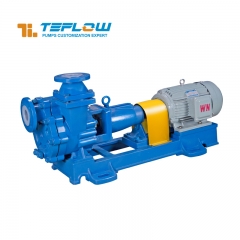
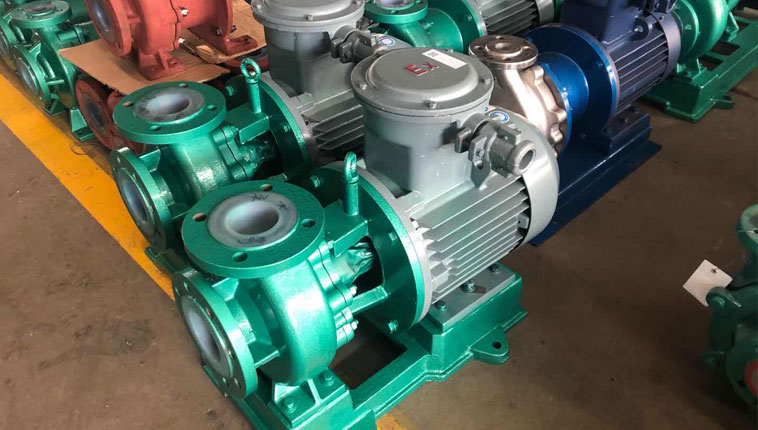
Transfer from sump to pretreatment sedimentation tank: fluorine-lined centrifugal pump (first choice for continuous high-flow duties)
Closed collection tanks with strict anti-leakage requirements: fluoroplastic magnetic drive pump (seal-free design to eliminate acidic wastewater leakage)
2.Recommended wetted materials
First choice: PVDF / F46 fluoroplastics; resistant to dilute hydrofluoric acid and nitric acid with moderate abrasion resistance
Use with caution: 316L, duplex steel (passivation film fails in HF environments); ordinary PP, PVC (insufficient long-term fluorine resistance)
3.Seal recommendation: silicon carbide vs silicon carbide mechanical seal to resist abrasion by silicon particles.
Scenario 2: Acid Line Wastewater
Wastewater Source & Medium Characteristics
Discharge from wafer edge etching and phosphosilicate glass removal; main components include dilute hydrochloric acid, minor nitric acid and fluorosilicates; pH 1~3; high chloride content; small amounts of silicon sludge suspended solids.
Corrosion challenges: chloride ions trigger pitting and crevice corrosion in stainless steel. Even at ambient temperature in dilute hydrochloric acid, 316L stainless steel pumps may suffer casing perforation within months.
Pump Type & Material Selection
1.Preferred pump types
Long-distance wastewater transfer with gravity inlet: fluorine-lined centrifugal pump
Collection sump with fluctuating liquid levels requiring suction lift: fluoroplastic self-priming pump
2.Recommended wetted materials
First choice: F46 fluoroplastic
Prohibited: direct use of 304/316L stainless steel; Hastelloy is only applicable to special high-temperature concentrated acid waste and not recommended for general wastewater due to excessive capital cost
3.Maintenance note: silicate crystals readily form in acid wastewater. Periodically disassemble and flush flow channels to prevent crystal jamming of impellers.
Scenario 3: Texturing Tank Wastewater (Most Corrosive PV Wastewater)
Wastewater Source & Medium Characteristics
Discharge from cell texturing for silicon surface structuring; wastewater contains mixed high-concentration hydrofluoric acid (HF) and nitric acid; fluoride concentration 500~3000 mg/L; pH < 2; intermittent discharge including periodic spent texturing mother liquor and multi-stage rinse water with highly variable concentration — the most corrosive wastewater in photovoltaic production.
Corrosion challenges: hydrofluoric acid corrodes most metals and represents the top challenge for PV pump selection; fluorosilicate complexes further accelerate material degradation.
Pump Type & Material Selection
1.Preferred pump types
High environmental standards and hazardous corrosive media: fluorine-lined magnetic drive pump (mandatory for zero leakage)
Texturing wastewater is high-risk corrosive fluid. Ordinary mechanical-seal centrifugal pumps are prohibited. Seal failure may cause acid spillage and safety incidents.
2.Recommended wetted materials
First choice: PFA / F46 fluoroplastic
Prohibited: all ordinary stainless steel, cast iron and FRP
3.Additional optimizations
Install flexible corrosion-resistant expansion joints at pump inlet and outlet;
Control medium temperature below 90°C; use modified fluoroplastics for high-temperature duties;
Equip system with low-liquid-level protection to prevent dry-run damage to magnetic drive containment shells.
Scenario 4: PV Electroplating Wastewater
Wastewater Source & Medium Characteristics
Combined wastewater from junction box and metal electrode electroplating processes; two categories: acidic electroplating rinse water (dilute sulfuric acid, hydrochloric acid, copper/nickel heavy metal ions) and alkaline electroplating wastewater (sodium hydroxide, complexing agents). Some production lines experience alternating acid-alkaline fluctuations with minor suspended metal hydroxide flocs.
Corrosion challenges: wide pH range plus heavy metal complex ions; alternating acid-alkaline conditions accelerate material aging.
Pump Type & Material Selection
1.Preferred pump types
Separate transfer by collected wastewater quality: fluoroplastic magnetic drive pump / fluorine-lined centrifugal pump
Small wastewater transfer with frequent start-stop cycles: fluoroplastic self-priming pump
Important reminder: acidic and alkaline electroplating wastewater must be pumped separately; do not share pumps or piping.
2.Graded wetted material scheme
Acidic electroplating wastewater (chloride and heavy metals present): PVDF / F46 fluoroplastic
Plain dilute alkaline rinse water without fluorine or chloride: reinforced polypropylene (GFRPP) for cost optimization
Mixed wastewater in acid-alkaline regulation tanks: fluoroplastic materials universally adopted to avoid corrosion risks from variable water quality
Conclusion
As photovoltaic capacity expands and environmental regulations tighten, stable long-term operation of wastewater systems becomes increasingly critical. For photovoltaic wastewater transfer pumps, specify materials first, select pump type second, then calculate flow rate and head.
Implement separate collection and customized selection per operating condition. Match fluoroplastic corrosion-resistant chemical pumps to four wastewater categories: silicon wafer cleaning, acid cleaning, texturing and electroplating. This reduces equipment replacement frequency and downtime losses, while blocking corrosive leakage at the source to satisfy both safe production and environmental compliance requirements for PV facilities.



 +86+0563-5093318
