


 +86 18130251359
 teflowpumps@tlpumps.com

In the wet process of PCB/FPC flexible circuit board production, PCB Cleaning runs through the entire production line. From board degreasing, micro-etching, pickling, neutralization to stripping, surface treatment and multi-stage rinsing, the stability of chemical liquid delivery directly determines the yield of finished circuit boards. Different from ordinary chemical corrosion conditions, PCB cleaning solutions feature complex systems, including degreasers, pickling solutions, neutralizing liquids, micro-etching liquids and rinsing water. The media contain abundant dissolved copper ions, along with tiny solid particles such as suspended copper powder and resin residues. Improper pump selection may easily lead to chemical leakage, metal ion leaching and particle shedding that causes secondary scratches on the board surface, resulting in production failures such as short circuits, surface defects and batch scrapping of circuit boards.
Many circuit board manufacturers encounter pitfalls during pump selection. Centrifugal pumps with mechanical seals generate debris from worn sealing components that mixes into the chemical liquid. Ordinary metal pump bodies corrode under acid and alkali, releasing metal ions to contaminate the board surface. Pumps with narrow flow passages accumulate copper slag and resin residues, causing fluctuations in flow rate and pressure, uneven spraying and inconsistent board cleaning results. The core goals of PCB cleaning pump selection are strong corrosion resistance, good passage capacity for fine solid residues, leak-free operation and no foreign matter shedding to prevent secondary pollution of circuit boards.
Ⅰ. Working Condition Breakdown for Each PCB/FPC Cleaning Process
1. Degreasing process: Alkaline degreaser at elevated temperature. The medium contains oil stains and resin debris. The pump’s wetted surface shall be smooth and resistant to material adhesion and scaling to ensure uniform chemical circulation.
2. Micro-etching & pickling process: Strong acidic solution with high-concentration dissolved copper ions and fine copper particles, highly corrosive. Pump materials must withstand acidic oxidizing media to prevent corrosion and peeling.
3. Neutralization process: Alternating acid and alkali environment with large pH fluctuations of tank liquid. Materials shall deliver dual corrosion resistance to both acid and alkali.
4. Stripping process: Alkaline stripping liquid with massive dry film residues stripped off and abundant suspended solids. Flow passages need to be unobstructed to reduce residue retention.
5. Multi-stage water rinsing: Rinse water carrying trace residual chemicals and fine particles for final board flushing. Stable flow is required to avoid particle backflow scratching the board surface.
The whole wet production line operates 24 hours continuously. Pumps need to run non-stop for long periods with frequent start-stop cycles, imposing high requirements on operational stability and maintenance intervals.
Ⅱ. Recommended Main Pump Type: Fluoroplastic Magnetic Drive Pump
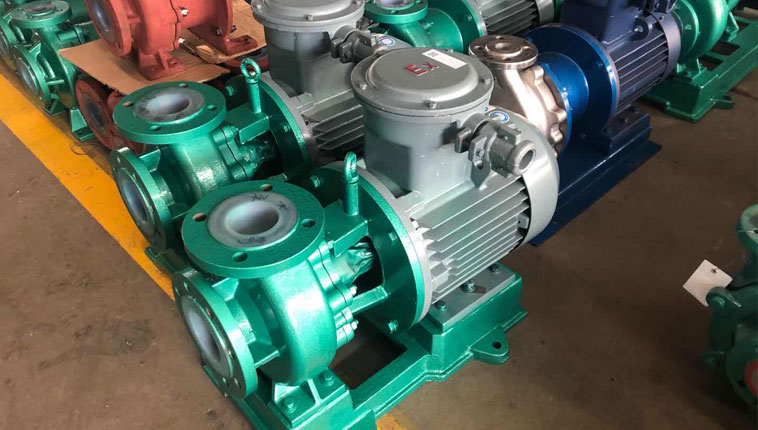
For the full range of working conditions in PCB Cleaning, fluoroplastic magnetic drive pumps are the preferred option. Adopting a magnetic coupling sealless structure that eliminates traditional mechanical seals, it removes the risk of solid debris generated by shaft seal wear. It fundamentally prevents chemical leakage and particle contamination, meeting the mandatory requirement against secondary pollution in circuit board manufacturing.
Material Selection
PVDF: Suitable for strongly corrosive and medium-high temperature liquids such as micro-etching liquid, pickling liquid and stripping liquid. It resists oxidation and alternating acid-alkali exposure, features dense and smooth surface, low tendency for copper slag and resin residue adhesion, and excellent anti-leaching performance. It is the mainstream material for PCB cleaning.
FEP/PFA fully fluorinated wetted parts: Applied to high-precision cleaning of FPC flexible boards requiring higher cleanliness. It offers broader corrosion resistance and ultra-low surface leaching, ideal for high-quality circuit board production lines.
The pump can be equipped with a wide-flow impeller internally to improve the passage capacity for fine copper powder and resin residues and reduce solid particle accumulation. The integrally molded wetted parts have smooth inner walls to lower residue adhesion and scaling, avoiding impurities impacting and scratching circuit boards along with spray liquid. The sealed pump chamber structure of magnetic drive pumps prevents outward leakage of acid and alkali liquids, reduces volatile corrosive gas, improves workshop environment, and avoids safety risks caused by chemical dripping and leakage.
Ⅲ. Non-recommended Pump Types
❌ Traditional centrifugal pumps with mechanical seals: Continuous friction of mechanical seals produces solid debris. Springs and metal components are prone to acid-alkali corrosion. Metal ions and debris enter the cleaning liquid, attach to the circuit board surface directly and cause scratches and circuit defects. They should be avoided in precision PCB cleaning processes.
❌ Ordinary stainless steel pumps: 304 and 316L stainless steel cannot withstand micro-etching liquid and various strong acid stripping chemicals. The medium corrodes the pump body and continuously leaches metal ions to contaminate the board surface. They must not be used directly in the flow path of PCB cleaning liquid.
❌ Small pumps with narrow flow passages: Small flow gaps easily trap and block copper slag and dry film residues, leading to flow attenuation, unstable pressure and uneven board spraying, which impairs cleaning consistency.
Ⅳ. Key Points for PCB Cleaning Pump Selection
1. Balance corrosion resistance and particle tolerance: Since the medium contains fine copper powder and resin residues, wide-flow impeller design is preferred. A pre-filter can be installed at the pump inlet when necessary to intercept large particles, protect the pump and prevent particles from hitting the board.
2. Strict control over ion leaching: No exposed metal shall exist on all wetted parts in contact with chemicals to prevent metal dissolution that contaminates circuit patterns.
3. Stable flow and pressure: Cleaning relies on spray pressure to guarantee board flushing effect. The pump operating point shall remain stable. Sudden pressure fluctuations will cause uneven board cleaning. A 10%~15% margin shall be reserved during selection to match nozzles and pipeline resistance of the production line.
4. Dry-run protection: Magnetic drive pumps are prohibited from dry running. PCB production lines are recommended to equip dry-run protection and liquid level interlock devices to prevent melting of the isolation sleeve under liquid shortage and production shutdown.
5. Continuous operation capability: The PCB wet production line runs nonstop all day. The materials of pump bearings and isolation sleeves shall adapt to long-term continuous operation and reduce shutdown maintenance frequency.
Ⅴ. Summary
PCB/FPC cleaning processes involve complex acid and alkali media with fine solid particles, and the board is highly sensitive to impurities and metal ions. With sealless zero leakage, acid & alkali corrosion resistance, low leaching and optional wide-flow impeller, fluoroplastic magnetic drive pumps fit the chemical circulation and delivery for most cleaning tanks including degreasing, micro-etching, pickling, neutralization, stripping and rinsing. They effectively prevent secondary pollution and board scratching by impurities and stabilize circuit board yield, serving as the preferred delivery solution for circuit board wet cleaning production lines.



 +86+0563-5093318
