


 +86 18130251359
 teflowpumps@tlpumps.com

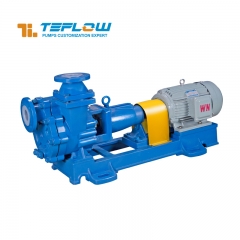
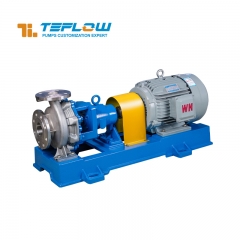
In the industrial scenario of alkali liquid transportation, the selection of pump body material directly determines the service life, operational safety and comprehensive operation and maintenance cost of the equipment. Alkali liquids (such as sodium hydroxide, potassium hydroxide, ammonia water, etc.) have the characteristics of strong corrosiveness, volatility under some working conditions, high viscosity or impurity content. The commonly used materials for transfer pumps are mainly divided into two categories: stainless steel and fluoroplastic. Both have their own advantages and disadvantages and are suitable for different working conditions. The core selection logic should focus on key factors such as alkali liquid concentration, temperature, working pressure, medium cleanliness and cost budget, so as to avoid pump body corrosion, leakage, failure and other problems caused by improper material selection, and ensure the stable and efficient operation of the transportation process.
First, clarify the core characteristics of the two materials, which is the basis for selection. Stainless steel (commonly used models 304 and 316L) is one of the mainstream choices for alkali liquid transportation due to its excellent mechanical strength, temperature resistance and adaptability. Its surface is smooth and not easy to scale, with high hygiene level, which will not dissolve harmful substances into the alkali liquid. Moreover, it has a solid structure and can be adapted to high-pressure and high-flow transportation scenarios. Fluoroplastic (commonly used PTFE, PFA, FEP, etc.) is characterized by extreme corrosion resistance, with excellent tolerance to strong acids, strong alkalis and strong oxidants. It is also non-stick and anti-scaling, but its mechanical strength is weak, its high-temperature resistance is limited, and it is suitable for medium-low pressure and small-medium flow working conditions. The core difference between the two lies in the trade-off between "mechanical strength + temperature resistance" and "extreme corrosion resistance", which needs to be accurately matched according to specific working conditions.
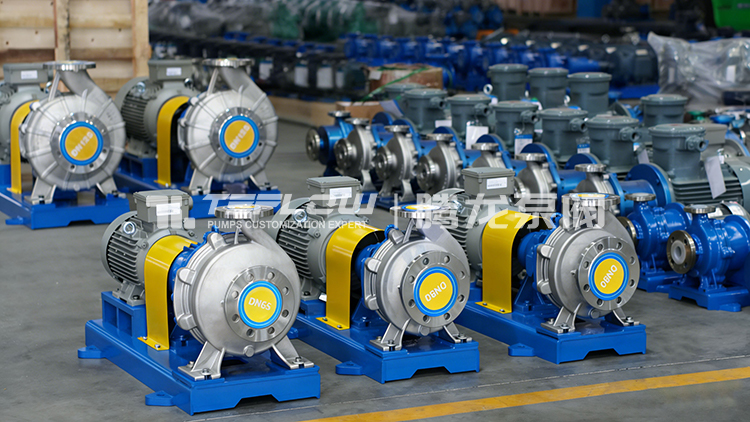
The applicable scenarios of stainless steel pumps (such as stainless steel magnetic pumps and stainless steel centrifugal pumps) focus on medium-low concentration, normal temperature and high-demand working conditions. Specifically, when the alkali liquid concentration is ≤ 30% and the temperature is ≤ 150℃,304stainless steel can fully meet the needs, which is suitable for alkali liquid transportation in most ordinary chemical and environmental protection fields, such as alkali liquid dosing in municipal sewage treatment and normal temperature alkali liquid circulation in the electronic cleaning industry. When the alkali liquid concentration is > 30%, the temperature is between 80℃ and 150℃, or the medium contains a small amount of corrosive impurities, 316L stainless steel should be selected. It contains molybdenum element, which has better corrosion resistance and can be adapted to scenarios with high requirements for medium cleanliness and corrosion resistance, such as pharmaceutical and fine chemical industries. In addition, stainless steel pumps have high mechanical strength, which can be adapted to high-pressure transportation and large-flow transportation. They are also easy to disassemble and maintain, with low failure rate, suitable for long-term continuous operation, especially for working conditions with high requirements for equipment stability and frequent start-stop.
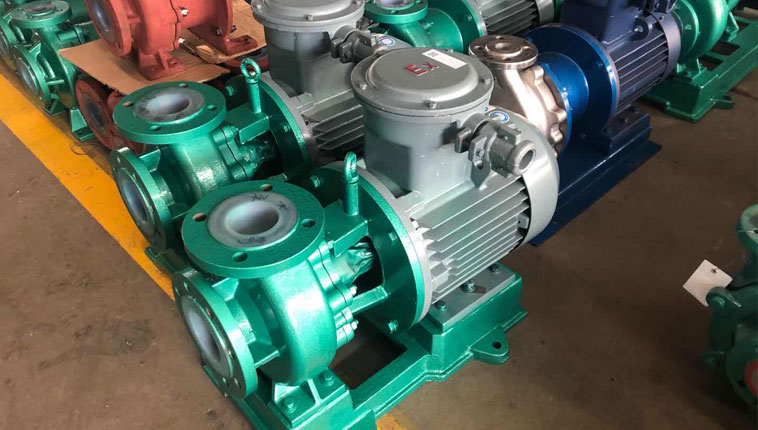
The applicable scenarios of fluoroplastic pumps are mainly high-concentration, strong corrosion and special medium working conditions, making up for the corrosion resistance shortcoming of stainless steel. When the alkali liquid concentration is extremely high (such as more than 50% concentrated sodium hydroxide), the temperature is ≤ 80℃, or the medium contains special corrosive components such as fluorides and strong oxidants, stainless steel is prone to pitting corrosion and stress corrosion cracking. At this time, fluoroplastic pumps become the only choice, such as the storage and transportation of high-concentration alkali liquid in the chemical industry and the treatment of strong alkali waste liquid in the electroplating industry. The flow passage components such as the pump body and impeller of fluoroplastic pumps are all formed by fluoroplastic molding, which do not have any chemical reaction with alkali liquid, enabling long-term stable transportation. Its non-stick characteristic can effectively avoid pump body blockage caused by alkali liquid crystallization and scaling. However, it should be noted that fluoroplastic has weak mechanical strength, is not resistant to high pressure (usually head ≤ 50m) and high temperature (it is easy to soften and deform when exceeding 80℃), and is not suitable for alkali liquid containing hard impurities, otherwise it will easily lead to pump body wear and leakage. At the same time, its maintenance difficulty is relatively large, and the cost of replacing components is higher than that of stainless steel pumps.
In addition to the core working condition factors, cost budget, operation and maintenance convenience and industry compliance requirements should also be taken into account during selection. From the perspective of cost, stainless steel pumps (304 material) have a moderate initial purchase cost and low later operation and maintenance cost, which are suitable for large-scale production scenarios with long-term continuous operation. Fluoroplastic pumps have a higher initial purchase cost than 304 stainless steel pumps, and their components wear quickly and have high replacement costs. They are more suitable for temporary transportation under short-term, special working conditions, or scenarios where stainless steel pumps cannot be adapted under high corrosion conditions. From the perspective of operation and maintenance, stainless steel pumps have a simple structure, and daily maintenance only needs to regularly check the sealing and lubrication conditions without professional technology. Fluoroplastic pumps need to avoid idling and dry grinding, and cannot transport media containing hard impurities, with higher maintenance requirements. In addition, industries such as pharmaceutical and food have extremely high requirements for medium cleanliness, so stainless steel pumps (316L material) are preferred, whose hygiene level can meet industry compliance standards. For scenarios with low requirements for cleanliness such as ordinary chemical industry and waste liquid treatment, fluoroplastic pumps can be selected according to the corrosion intensity.
In actual selection, two common misunderstandings should be avoided: first, blindly pursuing high corrosion resistance and ignoring working condition adaptability, such as selecting fluoroplastic pumps for alkali liquid transportation with conventional concentration and normal temperature, resulting in cost waste and insufficient operational stability; second, ignoring medium details, such as still selecting fluoroplastic pumps when the alkali liquid contains a small amount of hard impurities, leading to rapid wear and failure of the pump body. The correct selection process should be: first clarify the core parameters such as alkali liquid concentration, temperature, flow rate and head, then judge whether the medium contains corrosive impurities and the requirements for cleanliness, and finally select the corresponding material according to the cost budget and operation and maintenance capacity - stainless steel (304/316L) is preferred for conventional working conditions, and fluoroplastic is selected for high corrosion and special medium working conditions.
In summary, the selection of alkali liquid transfer pump material (stainless steel/fluoroplastic) is mainly based on "working condition adaptation + cost balance". Stainless steel pumps focus on mechanical strength, temperature resistance and stability, and are suitable for conventional working conditions with medium-low concentration, normal temperature, high flow rate and high pressure. Fluoroplastic pumps focus on extreme corrosion resistance and are suitable for special working conditions with high concentration, strong corrosion and medium-low pressure. Reasonable selection based on alkali liquid parameters, working condition requirements and cost budget can not only ensure the safety and stability of transportation, but also control the operation and maintenance cost, providing reliable support for the continuous operation of industrial production.



 +86+0563-5093318
